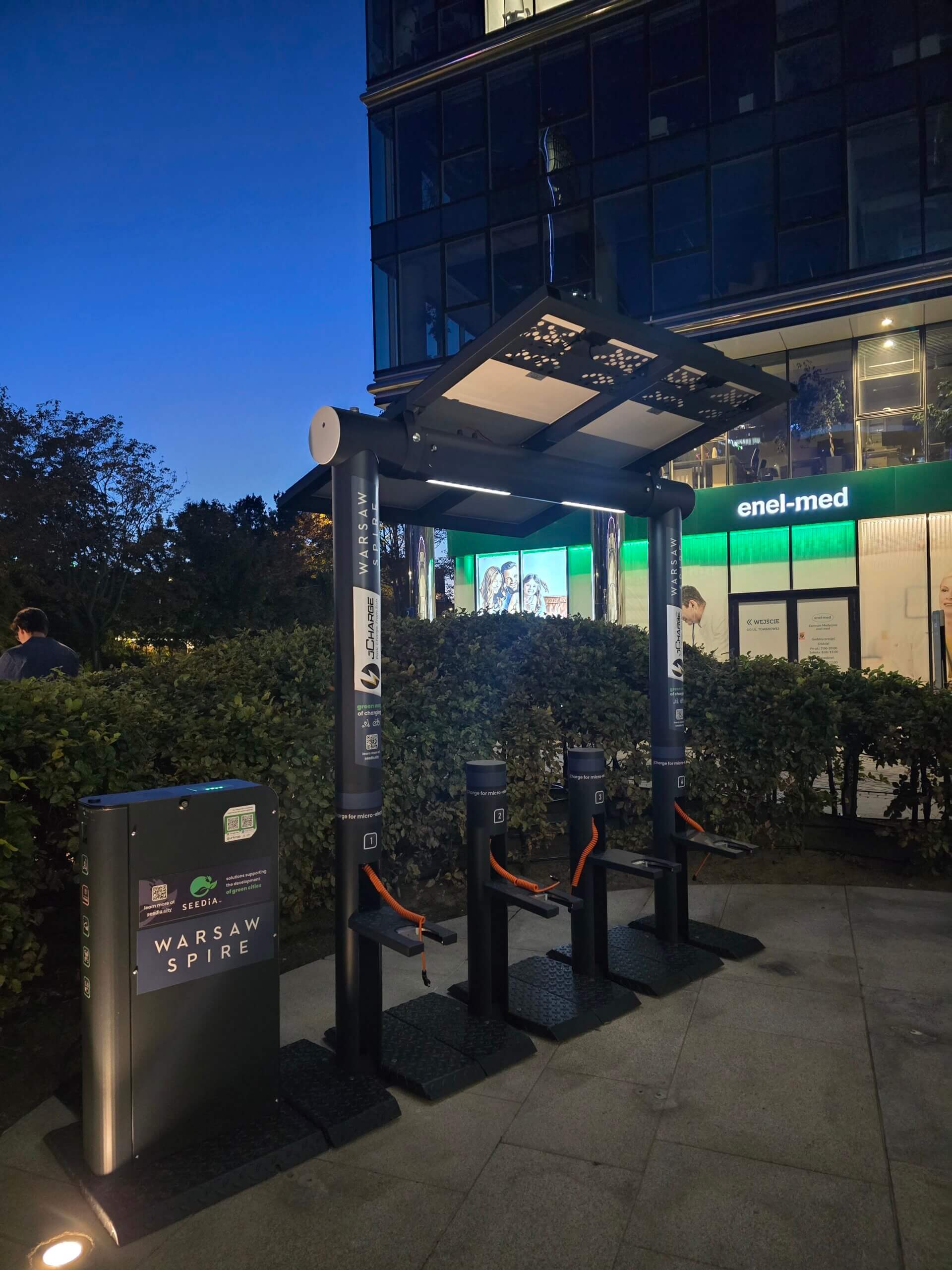
The SEEDiA J-Charge Warsaw Spire installation brings a fully solar-powered charging station for scooters and bicycles to one of the most modern office complexes in Warsaw. This solution supports micromobility for employees, including Samsung Poland teams, and contributes to sustainable Smart City development.
Solar Infrastructure for Daily Commuting
The SEEDiA J-Charge Warsaw Spire station enables safe parking and charging for electric scooters and bicycles throughout the workday. User authorisation improves safety, prevents misuse and allows operators to monitor how the station is being used.
Thanks to its solar-powered off-grid design, the station does not require connection to the electrical grid and directly contributes to reducing CO₂ emissions.
Integration with UrbMap App
The station works with the UrbMap mobile app, allowing users to:
Authorisation ensures secure charging and provides operators with valuable mobility data.
Smart Monitoring with InCity.io
All performance and usage data generated by the SEEDiA J-Charge Warsaw Spire station are available in the InCity.io management system. This includes:
This data supports ESG reporting and infrastructure planning.
Benefits for Modern Office Buildings
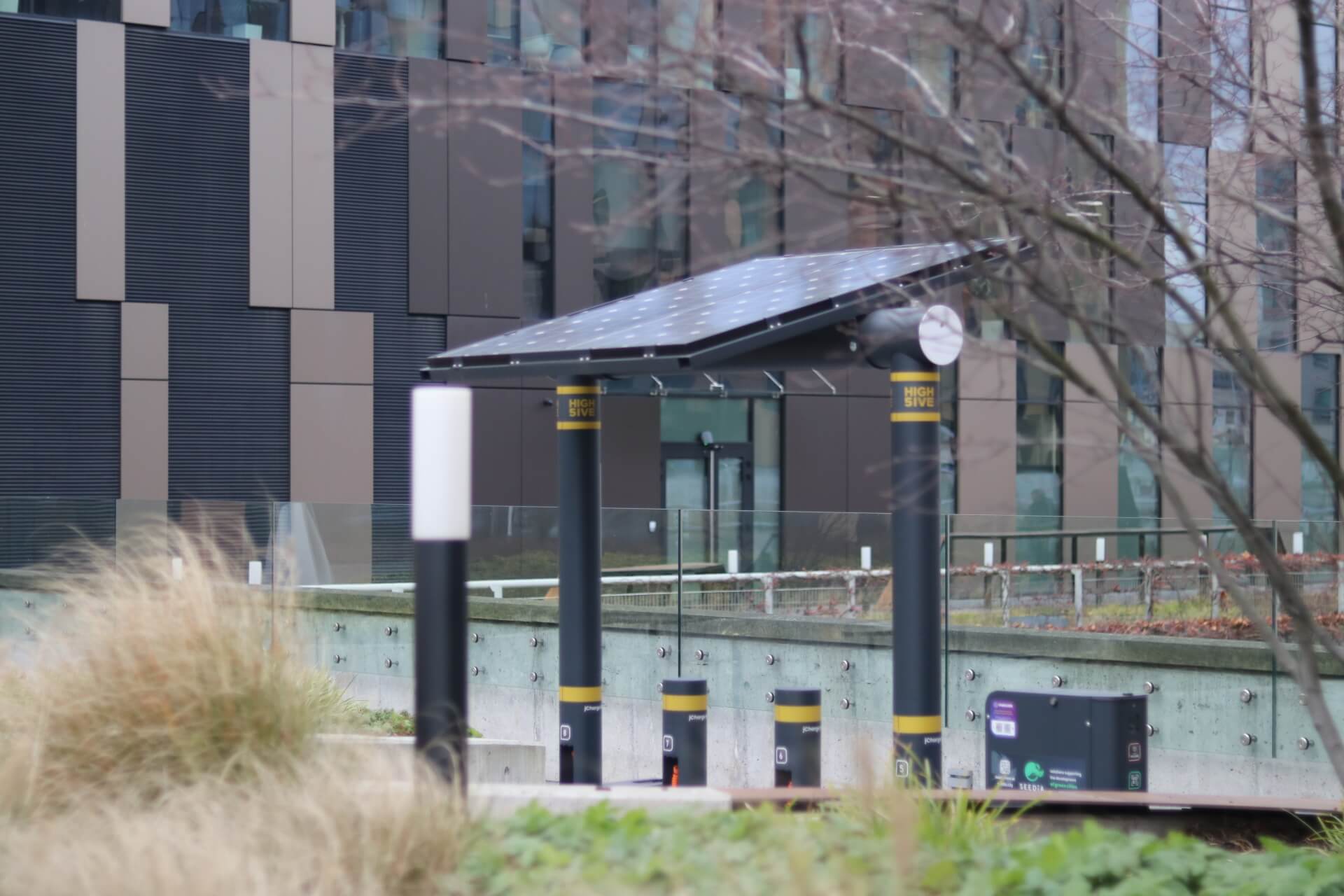
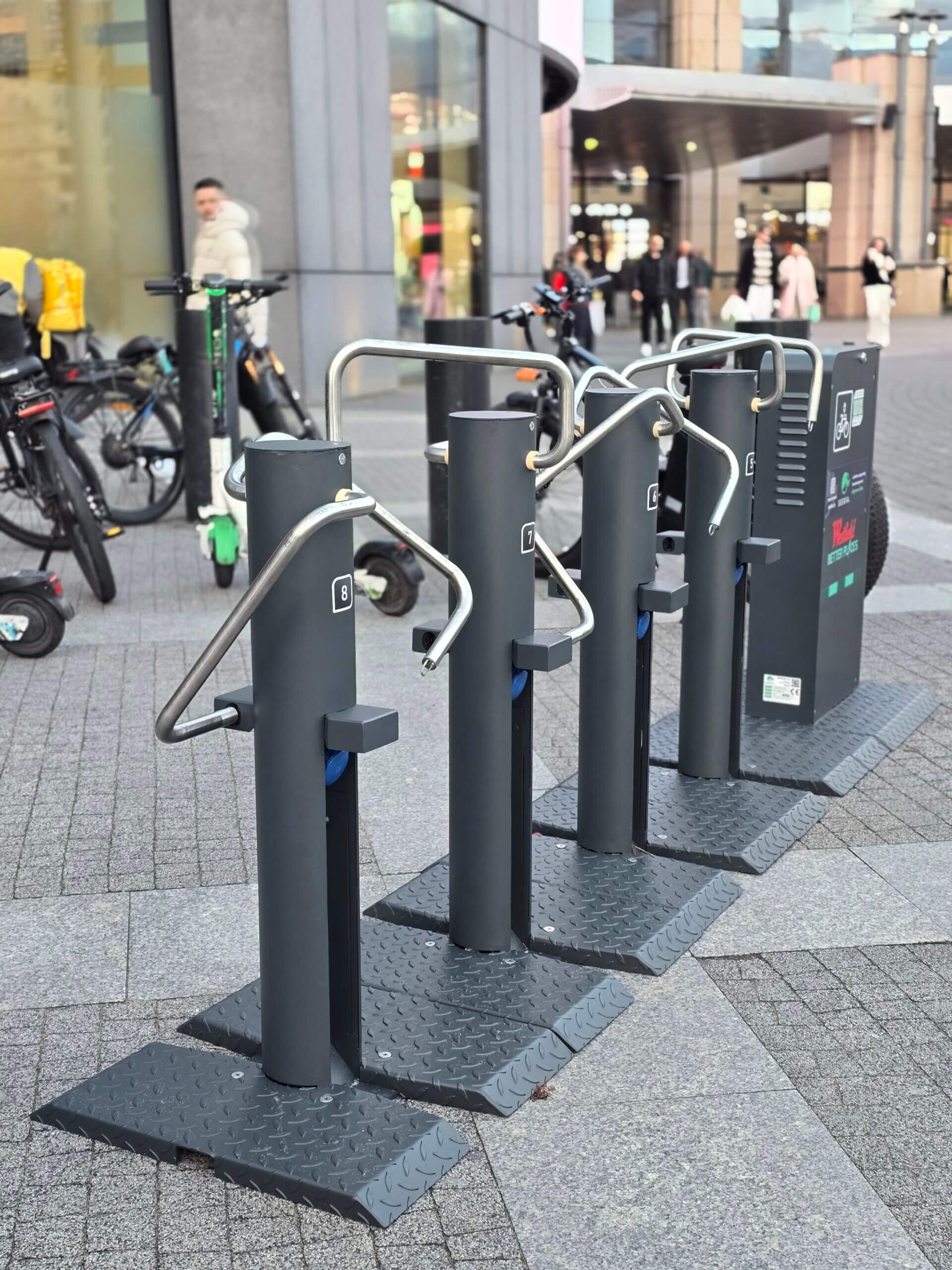
SEEDiA’s installation at Warsaw Spire is part of a broader development of modern micromobility infrastructure in major Polish cities. Similar solutions can be found in Westfield Arkadia in Warsaw, where the J-Charge station operates in an on-grid model, supporting everyday charging for shoppers and delivery operators. Another example is the High Five office complex in Kraków, where a solar-powered J-Charge station enables sustainable commuting for office employees. Together, these deployments demonstrate how consistent investment in smart infrastructure helps cities and commercial sites expand safe, accessible and environmentally friendly mobility services.